


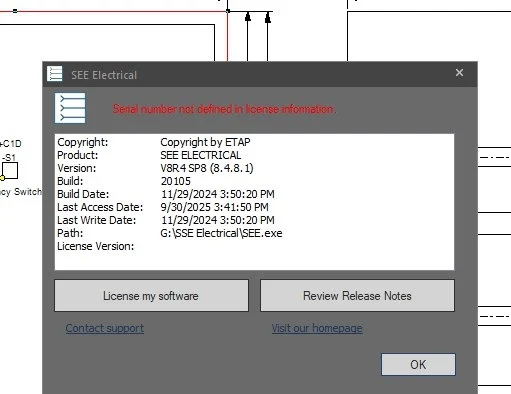
Overview of ETAP SEE Electrical
Table of Contents
ETAP SEE Electrical is a prominent software suite specifically crafted for electrical engineers and designers. It facilitates the creation of high-quality electrical schematics, wiring diagrams, and panel layouts with unmatched efficiency.
The software is renowned for its intuitive interface and intelligent design tools, which significantly reduce the time required for complex electrical projects. By integrating data management features, ETAP SEE Electrical ensures that all aspects of a project—from design to manufacturing—are synchronized and error-free.
Key Features of SEE Electrical V8R4
ETAP SEE Electrical V8R4 SP8 Build 20105 is packed with advanced functionalities that cater to a wide range of electrical engineering needs:
-
Intelligent Schematic Design: Create and manage complex electrical schematics with an extensive symbol library. The software automates wire numbering and cross-referencing, ensuring your designs are accurate and consistent.
-
Real-Time Error Checking: The built-in electrical rule checks (ERC) help identify potential wiring errors, shorts, or connectivity issues as you design, preventing costly mistakes before they reach the manufacturing stage.
-
Automated Panel Layouts: Generate 2D and 3D panel layouts directly from your schematics. This feature provides an early visual representation of the final product, aiding in spatial planning and thermal management.
-
Comprehensive Reporting: Automatically generate detailed reports, including bills of materials (BOMs), wire lists, and connection reports, which are essential for procurement and manufacturing.
-
Powerful Data Integration: The software supports seamless data exchange with other enterprise systems like ERP and PLM, ensuring efficient collaboration and data management.
What’s New in SEE Electrical V8R4 SP8 Build 20105
Version 8R4 SP8 Build 20105 represents a significant update, focusing on stability, performance, and user experience. Key enhancements in this latest electrical design software update include:
-
Improved Performance: The build offers faster processing and loading times for large, complex projects, significantly boosting designer productivity.
-
Enhanced Symbol Management: The update introduces a more organized and accessible symbol library, making it easier for engineers to find and place components.
-
UI/UX Refinements: The user interface has received subtle but effective improvements to create a more fluid and intuitive design experience.
-
Stability Fixes and Bug Resolutions: This version addresses several known issues reported by users, ensuring a more stable and reliable design environment.
-
Updated Database: The component database has been expanded to include the latest industry-standard parts, ensuring compliance with current industry standards.
System Requirements
To run ETAP SEE Electrical V8R4 SP8 Build 20105 smoothly, your system should meet the following hardware and software requirements:
-
Operating System: Windows 10 (64-bit) or Windows 11 (64-bit).
-
Processor: Intel Core i5 or higher (Xeon recommended for extensive projects).
-
RAM: A minimum of 8 GB is required, with 16 GB or more recommended for complex 3D projects.
-
Storage: At least 10 GB of free hard disk space.
-
Graphics: A dedicated graphics card with 1 GB of VRAM or higher (supporting OpenGL 2.1).
-
Additional Software: .NET Framework 4.7.2 or higher, and Microsoft Excel or an equivalent spreadsheet viewer for report generation.
Installation Guide
A successful installation ensures you can start using the electrical design software without issues. Follow these steps carefully:
-
Run as Administrator: Ensure you have administrative privileges on your machine. Right-click the installer file and select “Run as administrator.”
-
Accept the License Agreement: Read through the software license terms and conditions and accept them to proceed.
-
Choose Installation Type: The installer typically offers a standard (typical) and a custom installation. The standard option is recommended for most users.
-
Select Installation Directory: Choose the destination folder where the software will be installed.
-
Install Required Components: The installer may prompt you to install or update prerequisites like the .NET Framework.
-
Complete the Installation: Click “Install” and wait for the process to finish. Once complete, you may be prompted to restart your computer.
-
Enter Your License: After the first launch, you will need to enter your valid license key to activate the software.
How to Use SEE Electrical
Getting started with ETAP SEE Electrical is streamlined for both new and experienced users. Here’s a step-by-step guide to creating a project:
-
Launch the Software and Start a New Project: On the start page, select “Create New Project” and follow the wizard to define the project’s properties, like name and title block.
-
Open a Drawing Sheet: Once the project is created, open a new drawing to begin placing components.
-
Add Components: Select symbols from the integrated library and place them on the drawing. You can search for specific components using the search function.
-
Connect Components: Use the “Draw Wire” tool to create connections between the placed symbols. The software will automatically assign wire numbers.
-
Generate Reports: After completing your schematic, navigate to the “Reports” menu to generate BOMs, wire lists, and other necessary documentation.
-
Create Panel Layouts: Use the tools under the “Panel Layout” module to define your enclosure and place components from your schematics within it.
Best Use Cases
ETAP SEE Electrical V8R4 is a versatile tool used across multiple engineering sectors. The most common use cases for SEE Electrical include:
-
Industrial Control Systems: Designing schematics, control panels, and cable plans for automation and process control.
-
Building Automation: Creating electrical layouts for HVAC, lighting, and security systems in commercial and residential buildings.
-
Machine Manufacturing: Developing electrical systems for new machinery, including wiring diagrams and detailed panel designs.
-
Automotive & Transportation: Designing and documenting complex wiring harnesses for vehicles, aircraft, and marine vessels.
-
Power Distribution: Planning and executing power distribution layouts for substations and industrial facilities.
Advantages and Limitations
To provide a balanced view of ETAP SEE Electrical, it is important to consider its pros and cons:
Advantages:
-
High Efficiency: Intelligent tools automate many tasks like wire numbering, cross-referencing, and reporting, greatly speeding up the design process.
-
Error Reduction: The integrated error checking and rule validation ensure designs are correct and manufacturable, reducing rework.
-
Collaboration: The software’s data management features facilitate team-based collaboration by centrally storing all project data.
-
Cost-Effective: By reducing errors and streamlining processes, the software contributes to significant cost savings for engineering firms.
Limitations:
-
Licensing Costs: As a professional-grade software solution, the cost of a full license and maintenance can be a significant investment for smaller firms.
-
Learning Curve: While intuitive, the software is complex, and new users may require time to learn its full potential, especially the advanced features.
-
Resource Intensive: For optimal performance, the software requires a modern, high-specification computer, which can be an additional cost.
Alternatives to ETAP SEE Electrical
While ETAP SEE Electrical is a market leader, several alternatives to SEE Electrical may suit different needs or budgets:
-
AutoCAD Electrical: A widely recognized tool that is part of the Autodesk ecosystem, ideal for professionals already using other Autodesk products.
-
EPLAN Electric P8: Another powerful competitor known for its strong data management and automation capabilities, commonly used in large-scale industrial projects.
-
SolidWorks Electrical: A suite integrated with the SolidWorks 3D design environment, offering a seamless experience for mechanical and electrical co-design.
-
ProfiCAD: A more lightweight and cost-effective solution, suitable for smaller projects or individual engineers who don’t require the extensive features of the larger packages.
-
Zuken E3.series: A comprehensive platform for electrical and fluid engineering design, known for its robust automation and scalability.
Frequently Asked Questions
Q1: What is ETAP SEE Electrical used for?
ETAP SEE Electrical is a dedicated electrical CAD software used to design, document, and manage electrical engineering projects, including schematics and panel layouts.
Q2: What is new in SEE Electrical V8R4 SP8?
This latest build focuses on stability and performance, featuring UI refinements, enhanced symbol management, and faster processing for large projects.
Q3: Is ETAP SEE Electrical hard to learn?
The software has an intuitive interface, but mastering its advanced features requires time. ETAP provides comprehensive training and support to ease the learning process.
Q4: What are the system requirements for this version?
It requires a 64-bit Windows 10 or 11 operating system, an Intel Core i5 processor (or better), 8 GB of RAM (16 GB recommended), and a dedicated graphics card.
Q5: Can SEE Electrical generate BOMs automatically?
Yes, it includes an automatic report generation feature that can produce detailed Bills of Materials, wire lists, and other essential project documentation.
Q6: Does ETAP SEE Electrical support collaboration?
Yes, the software includes data management capabilities that allow multiple users to work on the same project efficiently, ensuring data integrity and version control.
Final Thoughts
ETAP SEE Electrical V8R4 SP8 Build 20105 stands as a comprehensive and efficient solution for modern electrical engineering challenges. Its blend of powerful design tools, automation, and a user-friendly interface makes it a vital asset for professionals looking to improve accuracy and productivity.
By investing in such a specialized tool, engineering firms can ensure project delivery with fewer errors and a more streamlined workflow, solidifying ETAP SEE Electrical as a premier choice in the electrical CAD market. Its recent updates only strengthen its position as a market leader in electrical design software.
Our Paid Service