
Overview of GSelector Radio Automation Software
Table of Contents
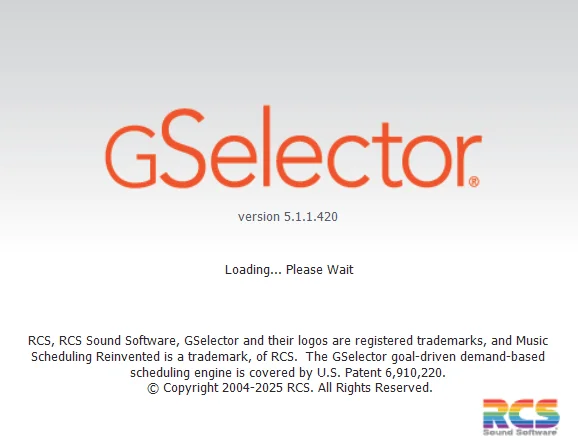
GSelector is a professional-grade radio automation and music scheduling software developed by RCS Sound Software, a global leader in broadcast technology solutions . This enterprise-level radio programming tool helps broadcasters create better sounding radio stations by optimizing music rotation, managing content libraries, and streamlining the entire scheduling workflow.
What sets GSelector apart from traditional music scheduling systems is its patented goal-driven, demand-based scheduling engine . Instead of relying on basic rotation patterns or tie-breakers, GSelector analyzes your music library to determine the natural demand for specific attributes—such as tempo, energy, vocalist types, and mood—and schedules songs accordingly. The software then automatically spreads out plays by core artists and fringe artists to maintain fresh, engaging content for listeners .
GSelector is part of RCS’s comprehensive broadcast ecosystem, which includes Zetta radio playout automation and Aquira traffic and billing software. The suite supports over 4,000 radio stations worldwide, making it the industry standard for professional broadcasters . GSelector V5.1.2, scheduled for release around December 2025, represents the latest evolution of this powerful radio automation tool .
Key Features of GSelector
Goal-Driven Scheduling Engine
GSelector’s core scheduling philosophy focuses on scoring each element based on how well it fits your station’s goals. Rather than using rigid rotation rules, the system evaluates every song against multiple criteria and selects the best-scoring element for each position . This approach creates more natural, listener-friendly rotations that adapt to changing music libraries and programming strategies.
Custom Song/Link Window
Introduced in GSelector 5.1, the Custom Song/Link Window allows programmers to create role-specific layouts for different users . For example:
-
Production Director layout: Simple metadata fields with mandatory requirements for new elements
-
Program Director layout: Advanced scheduling fields including history windows and category change tracking
-
Research layout: Dedicated research attributes for importing and analyzing song performance data
This customization ensures each team member sees only the information relevant to their workflow, improving efficiency and reducing errors.
Multi Song Changer with Mass Audio Analysis
GSelector can automatically analyze audio files to extract scheduling attributes like BPMs, energy levels, tempo, textures, and more . With GSelector 5.1’s Multi Song Changer feature, users can now select multiple songs and analyze them simultaneously, saving significant time when updating libraries .
Enterprise Multistation Database
GSelector’s native multistation database architecture allows broadcasters to schedule multiple stations from a single interface . Key capabilities include:
-
Cross-station protection to prevent same-song airplay across competing stations
-
Format Parent feature enabling child stations to inherit attributes from parent formats
-
Single database management for all market stations
Automated Jobs
GSelector’s Jobs system automates routine tasks through scheduled processes :
-
Data Exchange Job: Automatically backs up your database to the RCS Cloud
-
Generate Schedule Job: Proactively creates schedules to ensure logs are never missing
-
Housekeeping and Licensing Jobs: Handle maintenance tasks automatically
Selector2GO Remote Access
GSelector includes Selector2GO, a browser-based remote access solution that enables programmers to manage schedules, edit libraries, and export logs from any device with an Internet browser . This feature supports both PC and Mac users, providing flexibility for distributed programming teams.
Schedule Subscription Service (S3)
GSelector’s S3 feature allows stations to subscribe to published schedules from other stations within the same database or anywhere in the world . This is ideal for:
-
Simulcasting overnight programming across markets
-
Time-shifting schedules for different time zones
-
Maintaining consistent programming across station groups
Priority Lists and Rotation Rules
Programmers can assign multiple Priority Lists across different categories, applying a single set of goals and rules to all songs . The system supports Filter functionality for Priority Lists, making it easier to mass-change values across multiple songs .
What’s New in GSelector V5.1.2
GSelector V5.1.2 introduces significant enhancements that streamline database management, improve scheduling flexibility, and expand automation capabilities .
Metadata Importer
One of the most powerful additions in V5.1.2 is the Metadata Importer tool, which replicates the functionality of Zetta Media Importer or a spreadsheet interface . This feature allows programmers to:
-
Import prepopulated Excel spreadsheets with column headers matching GSelector fields
-
Map CSV or workbook data to specific database fields
-
Create and save custom Browse Formats for repeated import tasks
-
Import external research scores from any source, not just integrated services
The Metadata Importer provides advanced options including:
-
Allow Creation of New Assets or only update existing assets
-
Delimiters for adding multiple values to scheduling attributes like Sound Code or Vocalists
-
Integration with Schedule Subscription Service workflows for centralized metadata management
Browse List Comments
Programmers can now add comments directly to Browse Lists by right-clicking on any row . This enhancement enables:
-
Internal team communication about specific library assets
-
Programming notes for future reference
-
Collaboration between production and program directors
Library Enhancements
V5.1.2 introduces several library improvements :
-
Active Stations column: Shows where each element is active across multiple stations
-
Plays in Category: Displays spin counts for elements within specific categories
-
Delete dropdown: Enables bulk deletion of Filters and Lists
-
Album Art linking: Users can link Album Art to specific URLs
Packet Settings
New granularity in Packet management allows programmers to:
-
Prepopulate Packet Name Prefixes and Short Name Prefixes
-
Automatically remove packets when elements change categories
Goal and Editor Enhancements
Scheduling flexibility improves with :
-
Priority List Filtering: Apply Rotation Rules only to specific Priority Lists
-
Recycling Rule Activation/Deactivation: Temporarily disable rules without deleting them
-
Demand Date Display: View how your library should rotate based on specific future dates
Related Links Multiple Value Matching
Programmers can now select multiple values under matching fields, enabling more powerful Fly-in Links and Clock Related Links .
Expanded Read-Only User Profile
Administrators can create restricted user profiles where restricted areas display with a red outline rather than being hidden. This provides visual clarity while maintaining security .
System Requirements
While specific system requirements depend on deployment scale and configuration, GSelector operates within standard broadcast IT environments. RCS recommends:
-
Operating System: Windows-based systems (latest versions supported)
-
Database: Centralized database supporting multiple concurrent users
-
Network: VPN or network connectivity for multistation operations
-
Remote Access: Browser-enabled devices for Selector2GO functionality
RCS offers support contracts that include free product upgrades and access to the RCS Academy for training resources .
Installation Guide
Step 1: Contact RCS Sales
Begin by contacting RCS Sound Software to discuss your broadcasting requirements. The RCS team will help determine the appropriate GSelector configuration for your station’s needs, including multistation deployment options.
Step 2: Database Migration
If you’re switching from another music scheduling software, RCS’s dedicated onboarding team can assist with :
-
Metadata conversion
-
Schedule migration
-
Clock structure porting
-
Training for your programming team
Step 3: Schedule the Upgrade
Current GSelector users with active RCS Support contracts can schedule upgrades through RCS’s online booking portal . All upgrades are free with an active support contract.
Step 4: Integration Setup
For stations using Zetta radio automation, GSelector essentially shares a live, integrated database . When you make a change in one system, it automatically replicates in the other, ensuring consistency across your broadcast workflow.
Step 5: Training and Onboarding
RCS Academy offers training resources, including :
-
Over 150 how-to videos
-
GSelector-specific training modules
-
Webinars and RCS Live sessions
-
Custom onboarding based on your station’s situation
How to Use GSelector
Getting Started
-
Create your station: Set up station parameters and programming format
-
Design clocks: Build clock structures that define your programming flow
-
Enter and code songs: Add music library elements with appropriate metadata
-
Define goals and rules: Set scheduling parameters based on your programming philosophy
Basic Scheduling Workflow
GSelector can be as simple or complex as your needs dictate . Start with basic scheduling and gradually incorporate advanced features:
Beginner Approach:
-
Use minimum separation rules
-
Apply daypart rotation
-
Let GSelector automatically spread plays by core and fringe artists
Advanced Programming:
-
Apply Multi-Attribute Timed Segue Bans to define transitions based on two different attributes
-
Integrate research scores from Media Monitors, Mediabase, or other sources
-
Use Priority Lists to apply consistent goals across categories
-
Implement Flex Clocks for granular minute-by-minute scheduling
Managing Multiple Stations
The multistation database enables efficient management of market clusters:
-
Toggle between stations within the same interface
-
Copy elements, Priority Lists, and clocks across stations
-
Use Format Parent for stations with variation on parent formats
-
Access Cross-Station Protection to prevent duplicate airplay
Remote Operations
Use Selector2GO to :
-
Access GSelector from any browser-enabled device
-
Add or edit songs remotely
-
Adjust schedules and massage logs
-
Export logs from anywhere with a VPN connection
Best Use Cases
Terrestrial Radio Broadcasting
GSelector is the industry standard for commercial and public radio stations, providing the scheduling intelligence needed to compete in crowded markets. The goal-driven engine helps stations differentiate their sound while maintaining listener loyalty .
Multistation Radio Groups
Broadcast groups with multiple stations benefit from GSelector’s native multistation database architecture . The ability to manage all stations from one interface, copy attributes between stations, and maintain cross-station protection makes it ideal for cluster operations. Groupe 1981, France’s leading independent radio group, recently signed a five-year agreement to deploy GSelector across all ten of its stations .
Simulcast Operations
The Schedule Subscription Service enables seamless simulcasting across markets and time zones . Stations can subscribe to published schedules from other stations and time-shift content as needed.
Hybrid Cloud Operations
RCS continues to evolve GSelector with cloud hybrid capabilities . Stations can combine traditional on-premise operations with cloud-based backup and remote access.
Web Radio and Streaming Services
While designed for professional broadcasters, GSelector’s flexibility makes it suitable for web radio and streaming services that require sophisticated scheduling logic.
Advantages and Limitations
Advantages
Superior Scheduling Logic
GSelector’s goal-driven, demand-based scheduling engine creates more natural rotations than traditional rule-based systems . By analyzing attribute demand, the system automatically balances airplay between core and fringe artists, maintaining variety and listener engagement.
Enterprise Scalability
Native multistation database architecture supports unlimited stations within a single database . Broadcasters can manage entire market clusters without switching between systems.
Integrated Ecosystem
Seamless integration with Zetta radio automation creates a unified broadcast workflow . Changes made in either system automatically replicate, ensuring consistent database management and accurate royalty reporting.
Comprehensive Automation
GSelector’s Jobs system automates routine processes such as data backup, schedule generation, and housekeeping . This reduces manual workload and ensures business continuity.
Remote Accessibility
Selector2GO enables remote access from any device, supporting distributed teams and after-hours programming adjustments .
Customizable Workflows
The Custom Song/Link Window allows role-specific layouts for different team members, streamlining operations and reducing errors .
Limitations
Learning Curve
With extensive features and flexibility, GSelector has a steeper learning curve than simpler music scheduling tools . However, RCS Academy training and onboarding resources help reduce the time to proficiency.
Enterprise-Grade Pricing
As a professional broadcast solution, GSelector represents a significant investment, making it best suited for commercial broadcasters rather than hobbyists or small internet radio stations .
Primarily Windows-Based
While Selector2GO provides browser-based remote access, the core GSelector application is Windows-based, which may require virtualization for Mac-based environments.
Dependency on RCS Support
Regular upgrades and technical support require an active RCS support contract, which is standard for enterprise broadcast software but represents an ongoing operational cost.
Alternatives to GSelector
RadioBOSS
RadioBOSS is a popular radio automation software starting at $199.95 . It offers playlist generation, crossfade support, and built-in audio processing. While more affordable than GSelector, RadioBOSS lacks the enterprise multistation management, goal-driven scheduling engine, and integrated ecosystem that makes GSelector the industry standard for professional broadcasters.
ZaraRadio
ZaraRadio is a free radio automation solution with a simple interface, making it suitable for hobbyists and very small stations . It includes manual and automatic modes, event scheduling, and support for multiple sound cards. However, it lacks sophisticated scheduling algorithms, multistation support, and integration capabilities essential for commercial operations.
StationPlaylist Creator
StationPlaylist Creator focuses on music scheduling and playlist creation, priced at $249 . It allows playlist generation based on genre, tempo, or mood and integrates with other StationPlaylist products. Compared to GSelector, it offers more limited scheduling sophistication and lacks the multistation database architecture.
SAM Broadcaster Pro
SAM Broadcaster Pro is professional-grade internet radio software priced at $299 . It offers dual sound card support, gap killer, and powerful encoding. SAM is better suited for internet radio environments than traditional terrestrial broadcasting and lacks GSelector’s multistation management capabilities.
Jazler RadioStar 2
Jazler RadioStar 2 is a comprehensive radio automation solution starting at $999 . It includes scheduling, playlist management, audio processing, and remote control. While it serves similar markets to GSelector, Jazler doesn’t match the global scale, integrated ecosystem, or industry penetration of RCS solutions.
Comparison Summary
| Feature | GSelector | RadioBOSS | ZaraRadio | SAM Broadcaster | Jazler RadioStar 2 |
|---|---|---|---|---|---|
| Scheduling Engine | Goal-driven | Basic rotation | Basic rotation | Rotation-based | Rule-based |
| Multistation Support | Native enterprise | Limited | None | Limited | Limited |
| Target Market | Professional | Versatile | Hobbyist | Internet radio | Professional |
| Automation Jobs | Comprehensive | Basic | Basic | Basic | Moderate |
| Remote Access | Selector2GO | Limited | Limited | Limited | Limited |
| Pricing | Enterprise tier | $199.95 | Free | $299 | $999+ |
Frequently Asked Questions
What is GSelector and how does it work?
GSelector is a professional music scheduling and radio automation software developed by RCS Sound Software . It uses a patented goal-driven scheduling engine that analyzes your music library to determine the natural demand for song attributes like tempo, energy, and mood. GSelector then selects the best-scoring element for each position, creating more natural rotations and better-sounding radio stations .
What are the key features in GSelector V5.1.2?
GSelector V5.1.2 introduces the Metadata Importer for database manipulation via Excel spreadsheets, Browse List Comments for team collaboration, expanded Library enhancements including Active Stations columns, greater Packet granularity, and Priority List Filtering in Rotation Rules . These features streamline database management and improve scheduling flexibility.
How does GSelector compare to Selector?
GSelector represents the evolution of RCS’s music scheduling software, offering a modern, goal-driven scheduling approach compared to Selector’s traditional rule-based system. GSelector incorporates score-based scheduling, multistation native databases, automation jobs, remote access via Selector2GO, and integration with Zetta radio automation . RCS offers free upgrades and onboarding support for stations making the switch from Selector to GSelector .
What are the system requirements for GSelector?
GSelector operates on Windows-based systems with a centralized database supporting multiple concurrent users . For remote operations, browser-enabled devices with VPN connectivity support Selector2GO access. RCS recommends contacting their sales team for specific requirements based on your station’s scale and configuration.
Can I access GSelector remotely?
Yes, GSelector includes Selector2GO, a remote companion application that allows programmers to access GSelector from any browser-enabled device . With a VPN connection, users can add or edit songs, adjust schedules, massage logs, and export logs remotely. Selector2GO supports both PC and Mac platforms.
What is the difference between GSelector and Zetta?
GSelector is a music scheduling and radio automation software designed to plan and optimize programming , while Zetta is a radio playout automation system that manages on-air playback . When used together, they share an integrated database—changes in one system automatically replicate in the other, creating a seamless broadcast workflow . This integration ensures consistent metadata and accurate royalty reporting.
Does GSelector support multiple radio stations?
Yes, GSelector’s native multistation database allows programmers to schedule multiple stations simultaneously from a single interface . Features include cross-station protection to prevent same-song airplay, Format Parent functionality for station groups, and the ability to copy clocks, Priority Lists, and metadata across stations .
What training resources are available for GSelector?
RCS Academy offers comprehensive training resources for GSelector, including over 150 how-to videos, on-demand training modules, and live RCS Live webinars . RCS also provides dedicated onboarding teams to assist with database migration and staff training for stations new to the platform .
Can GSelector integrate with external research services?
Yes, GSelector integrates with research services like Media Monitors, Mediabase, Critical Mass Media, and Test All Media . The new Metadata Importer in V5.1.2 extends this capability, allowing programmers to import research scores from any source using Excel or CSV formats .
Is GSelector available in languages other than English?
Yes, RCS serves broadcasters globally, and GSelector supports international operations . RCS provides documentation and support in multiple languages, reflecting their worldwide customer base.
Final Thoughts
GSelector V5.1.2 represents the pinnacle of radio music scheduling and automation software, combining sophisticated goal-driven scheduling with enterprise scalability and comprehensive integration capabilities. The latest version’s Metadata Importer, expanded library management features, and granular Packet settings demonstrate RCS’s commitment to evolving the platform to meet modern broadcasting needs.
For professional broadcasters, GSelector offers several distinct advantages:
-
Superior scheduling logic that creates more natural rotations and better listener experiences
-
Native multistation management reducing operational complexity
-
Seamless integration with Zetta radio automation ensuring consistent operations
-
Comprehensive automation reducing manual workload
-
Remote access enabling flexible operations
While GSelector requires an enterprise-grade investment and presents a learning curve, the platform’s power and flexibility make it the industry standard for commercial radio stations worldwide. With over 4,000 stations using the Zetta/GSelector combination and major broadcast groups like Groupe 1981 committing to five-year deployments , GSelector’s position as the leading professional music scheduling software remains unchallenged.
For broadcasters seeking to differentiate their sound, improve operational efficiency, and build future-ready radio operations, GSelector V5.1.2 provides the scheduling intelligence and workflow automation needed to succeed in today’s competitive broadcasting environment.
Our Paid Service
“We do not sell or provide any software. We only offer professional support services. If any software on your system is not working properly, or you are facing installation errors, crashes, or any other technical issue — just contact us. We will help you fix the problem quickly and remotely via AnyDesk. No software will be provided from our side — only expert troubleshooting and support.”