

Download Hardata HDX Radio 3 (Complete Guide to Professional Broadcasting Software) from this link…

Overview of Hardata HDX Radio 3
Table of Contents
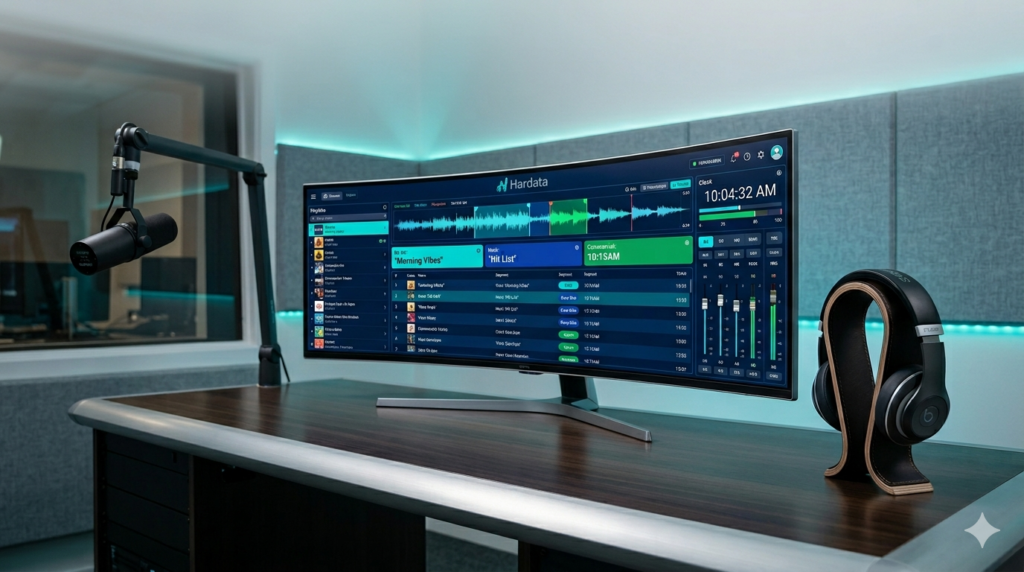
In the competitive landscape of radio broadcasting, efficiency, reliability, and audio quality are non-negotiable. Hardata HDX Radio 3 is a professional-grade broadcast automation software designed to meet the rigorous demands of modern radio stations. Unlike basic media players, HDX Radio 3 functions as a complete radio operating system, managing everything from live assist playout to fully automated 24/7 broadcasting.
This software serves as the central hub for radio operations, allowing broadcasters to move beyond manual processes. By integrating audio playback, scheduling, and real-time reporting into a single platform, it provides the backbone for creating polished, professional broadcasts. Whether you are managing a community station or a large-scale commercial network, HDX Radio 3 offers the stability and advanced tools necessary to maintain a consistent on-air presence.
Key Features of HDX Radio 3
HDX Radio 3 distinguishes itself through a robust set of features designed to streamline the broadcast workflow. The focus is on reliability and depth, ensuring that both novice operators and seasoned engineers can manage complex broadcast schedules with confidence.
-
Professional Audio Engine: Supports high-resolution audio formats, ensuring pristine sound quality from studio to transmitter. It includes a multi-channel mixer, advanced DSP effects, and support for multiple sound cards for complex routing.
-
Intuitive Playout Interface: The main interface is designed for speed. Operators can quickly drag and drop audio files, manage crossfades, and trigger instant events like jingles or emergency announcements with a single click.
-
Voice-Tracking Capabilities: Allows DJs and presenters to record their segments in advance. This feature enables a station to maintain a “live” feel during off-peak hours by pre-recording intros and outros that play automatically around scheduled music tracks.
-
Dynamic Log Editor: Provides granular control over the broadcast day. Users can manually edit the playout log, insert spontaneous content, and rearrange segments without disrupting the live broadcast output.
-
Automated Ad Insertion: Manages commercial breaks with precision. The software can schedule and rotate advertising campaigns based on contracts, ensuring that ads play at the correct times and are tracked for billing purposes.
What’s New in the Latest Version
The latest iteration of HDX Radio 3 focuses on enhancing user experience and modernizing connectivity. Key updates include:
-
Improved Web Interface: Remote control capabilities have been enhanced, allowing station managers to monitor and control playout from any browser-enabled device, providing flexibility for remote operations.
-
Enhanced Metadata Handling: Upgraded support for dynamic metadata streaming, ensuring that song titles, artist information, and album art are accurately displayed on digital radio (DAB+) and online streaming platforms.
-
Advanced Backup Systems: New failover mechanisms have been integrated. If the primary audio source fails, the system can instantly switch to a secondary server or a backup playlist, minimizing dead air.
System Requirements
To ensure optimal performance and stability, your broadcast hardware should meet the following recommended specifications:
Operating System:
-
Windows 10 Pro (64-bit) or Windows 11 Pro (64-bit)
-
Note: Windows Server editions are also supported for centralized network deployments.
Hardware:
-
Processor: Intel Core i5 or i7 (or equivalent AMD) – multi-core processor recommended.
-
RAM: Minimum 8 GB (16 GB recommended for heavy multitasking).
-
Storage: 256 GB SSD (for OS and software) + separate high-capacity HDD for audio library storage.
-
Audio: Professional ASIO-compatible sound card or audio interface for low-latency performance.
-
Network: Dedicated, stable internet connection for streaming and remote management.
Installation Guide
Proper installation is critical for system stability. Follow these steps to set up HDX Radio 3:
-
Pre-Installation Preparation:
-
Ensure your operating system is fully updated.
-
Install and test your ASIO audio drivers before installing the broadcast software.
-
Disable any power-saving settings that might interfere with continuous operation.
-
-
Run the Installer:
-
Execute the official installation file.
-
Grant administrative permissions when prompted by Windows User Account Control.
-
-
Configure Audio Devices:
-
During the initial setup, select your primary output device (usually the main studio output) and your headphone cue output.
-
Configure the audio routing matrix to direct different players (e.g., Player A, Player B, and the Auxiliary player) to the correct sound card channels.
-
-
Library Import:
-
After installation, use the Media Base tool to import your audio library. The software will analyze audio files for BPM, volume levels (normalization), and length to prepare them for playout.
-
-
License Activation:
-
Enter your purchased license key. This validates the software and unlocks all professional features.
-
How to Use the Software: A Workflow Guide
Understanding the core workflow of HDX Radio 3 is essential for efficient broadcasting.
1. Building the Playlist
Use the Playlist Editor to construct your broadcast day. You can create templates for different dayparts (e.g., Morning Drive, Midday, Evening) and auto-fill them using the Smart Scheduler, which rotates songs based on category (e.g., Gold, Recurrent, Current) to maintain musical diversity.
2. Live Assist Mode
In a live broadcast, the operator uses the Playout Panel.
-
Player A & B: These are the main playback decks. When one song is playing, the next one is loaded into the second deck, ready for a smooth transition.
-
Jingles & Carts: The Cart Wall provides a grid of instant-play buttons for sounders, IDs, and jingles, allowing the DJ to add personality to the broadcast.
3. Automation Mode
For unattended operation, the system switches to Full Automation. The software follows the scheduled log precisely, managing crossfades, voice tracks, and advertisements without human intervention. The real-time log ensures that if a scheduled item is missing, the system intelligently fills the gap to avoid dead air.
Best Use Cases
HDX Radio 3 is versatile enough to power various types of audio operations:
-
Commercial Radio Stations: Ideal for stations requiring robust ad scheduling, traffic logging, and multi-user access with defined permissions for DJs, managers, and sales teams.
-
Community and Campus Radio: The user-friendly interface allows volunteers and students to learn professional broadcasting standards quickly without being overwhelmed by overly complex controls.
-
Internet Radio: Perfect for online-only broadcasters who need reliable streaming encoders and the ability to manage a station remotely.
-
Automated Background Music: Businesses like retail stores and hotels can use the automation features to create licensed background music channels that run seamlessly.
Advantages and Limitations
Advantages
-
Stability: Known for its rock-solid stability, capable of running 24/7 without crashes, which is the primary requirement for broadcast.
-
Scalability: Can grow from a single PC setup to a complex network with multiple studios sharing a central database.
-
Deep Customization: The interface and audio routing can be customized extensively to fit the specific hardware setup of any studio.
Limitations
-
Learning Curve: While the interface is intuitive, mastering the advanced database management and scheduling rules requires dedicated training.
-
Windows Dependency: The software is exclusive to Windows. Studios using macOS or Linux will need to use virtual machines or different hardware.
-
Cost: As a professional broadcast solution, it represents a significant investment compared to consumer-grade audio players.
Alternatives to HDX Radio 3
Depending on your budget and technical requirements, the following alternatives are available:
| Software | Key Focus | Best For |
|---|---|---|
| RadioBOSS | Advanced Automation | Stations needing powerful scheduling at a mid-range price point. |
| AIRTIME (Sourcefabric) | Open Source | Stations with technical teams looking for a free, community-driven solution. |
| MegaSeg | Mac-based DJ Automation | Radio stations or clubs operating within the Apple ecosystem. |
| Sam Broadcaster | Streaming & Community | Internet radio stations focused on streaming and audience interaction. |
Frequently Asked Questions
1. Can HDX Radio 3 be used for live streaming to the internet?
Yes. The software includes integrated encoders that support protocols like Icecast and Shoutcast, allowing you to stream your broadcast directly to the internet alongside your FM or DAB transmission.
2. Does the software support remote broadcasting?
Yes. It features a web-based remote control interface that allows authorized users to manage playlists, control playback, and monitor logs from any location with an internet connection.
3. Is there a demo version available to test the software?
Yes, the developer, Hardata, typically offers a fully functional trial version for a limited period. This allows broadcasters to test compatibility with their hardware and workflow before purchasing.
4. How does the software handle emergency alerts (EAS)?
HDX Radio 3 can be integrated with EAS (Emergency Alert System) units via GPIO (General Purpose Input/Output) triggers. When an alert is received, the system can automatically interrupt regular programming to broadcast the emergency message.
5. Can I use my existing audio library without converting files?
The software supports all major audio formats including MP3, WAV, AAC, and FLAC. It imports files directly, analyzing them for metadata to populate your database.
6. What is the difference between a license and a subscription?
Hardata typically operates on a per-workstation license model, which includes a period of free updates and support. After that period, the software continues to function indefinitely, but upgrades to newer versions require a maintenance renewal.
Final Thoughts
Hardata HDX Radio 3 stands as a pillar of reliability in the broadcast software sector. By combining powerful automation with precise manual control, it provides a solution that respects the creative role of the DJ while ensuring technical operations run without a hitch.
Investing in such a platform is a strategic decision for any radio broadcaster aiming for professionalism. It provides the tools necessary not only to automate repetitive tasks but also to elevate the overall listening experience through superior audio quality and consistent, engaging content. For broadcasters serious about their craft, HDX Radio 3 remains a compelling choice that balances power with usability.
Premium Software Support Service
If you need professional help with software installation, setup, or technical configuration, our team is available to assist you.
Contact & Support
For quick assistance and latest updates, connect with us using the links below:
🔹 Direct Telegram Support
https://t.me/PlayoutKing
🔹 Official Telegram Updates Group
https://t.me/yourgroup
Service Policy
- Remote testing available through AnyDesk before confirmation.
• Verify the setup and performance before completing the order.
• Support available for single or multiple systems.
• Step-by-step guidance to ensure smooth installation and working environment.
Our goal is to provide reliable technical assistance so your software runs smoothly without interruptions.