

Download Raduga 4.0.1 (Comprehensive Radio Automation Software for Broadcasters) from this link…

Overview of Raduga 4 Software
Table of Contents
In the fast-paced world of radio broadcasting, efficiency and precision are paramount. Raduga 4.0.1 stands out as a robust radio automation solution designed to streamline operations for radio stations, internet broadcasters, and content creators. This software provides a centralized platform to manage audio playback, schedule programming, and integrate live shows with automated sequences. By offering a blend of powerful scheduling tools and an intuitive interface, Raduga 4 helps broadcasters maintain a consistent and professional on-air presence without the need for constant manual intervention. Whether you are managing a small community station or a large network, Raduga 4 provides the technical foundation to handle complex playlists, commercials, and live assist tasks effectively.
Key Features
Raduga 4.0.1 is packed with functionalities that cater to the technical and creative demands of modern radio. Below is a breakdown of its core capabilities:
-
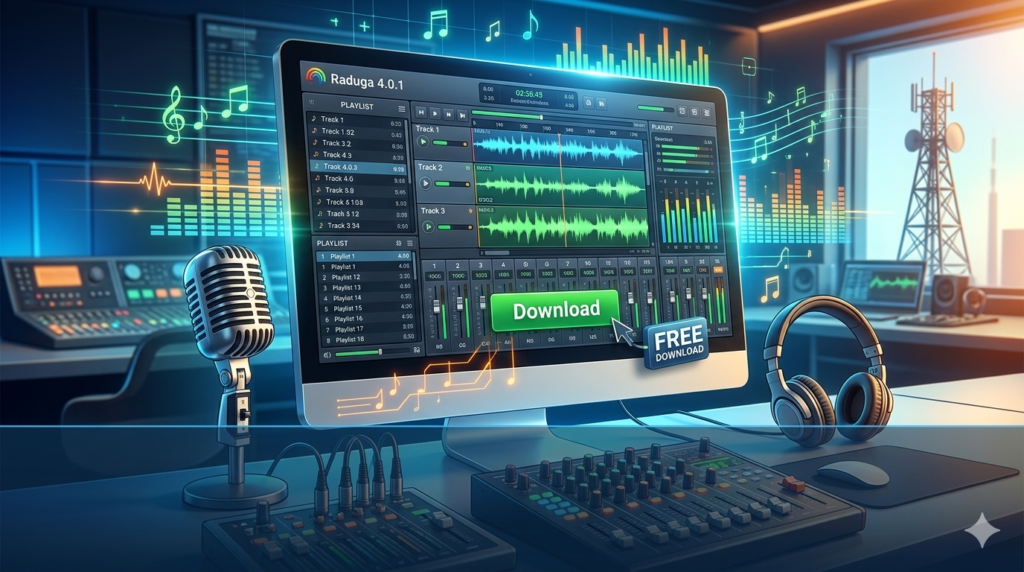
Intuitive Playlist Management: The software features a drag-and-drop playlist editor, allowing operators to arrange songs, jingles, and advertisements quickly. This visual approach simplifies the organization of complex broadcast schedules.
-
Advanced Scheduling Engine: Users can create detailed time-based schedules with precision. The engine supports event-based triggers, enabling the automatic playback of specific content like news bulletins or syndicated shows at exact times.
-
Live Assist Mode: For live shows, the “Live Assist” functionality gives DJs manual control. They can queue tracks, trigger jingles, and speak over intros while the software manages the underlying playback logic, ensuring a smooth blend of live personality and automated reliability.
-
Full Automation Capabilities: When the studio is unattended, Raduga 4 switches to full automation mode. It reliably executes the entire day’s programming log, playing music, commercials, and station IDs without human oversight.
-
Integrated Voice Tracking: This feature allows broadcasters to pre-record voice tracks and voiceovers. These tracks can be inserted between songs or segments, giving the illusion of a live DJ even during automated blocks, which is ideal for syndication or time-shifting content.
-
Remote Contribution Tools: Raduga 4 supports remote connectivity, enabling reporters or guest speakers to contribute to a live show from different locations via the internet. This expands the creative potential and geographic reach of the station.
-
Comprehensive Logging and Reporting: The software automatically logs every played track, commercial break, and system event. These logs can be exported for reporting to rights organizations, analyzing listener engagement, or auditing commercial airtime.
What’s New in Version 4.0.1
The 4.0.1 update focuses on stability and user experience improvements based on broadcaster feedback. While it retains the core functionality of the 4.0 series, this patch introduces:
-
Enhanced Audio Engine Stability: Optimizations to the audio processing pipeline reduce the risk of dropouts and improve overall sound fidelity during high-load operations.
-
Database Performance Improvements: Faster query times for large music libraries, ensuring that searching for tracks and loading schedules is nearly instantaneous.
-
Refined User Interface: Minor tweaks to the layout and icons improve usability, particularly in the playlist editor and scheduler views.
-
Bug Fixes: Resolution of specific issues related to SQL database connectivity and scheduled event triggers reported in the initial 4.0 release.
System Requirements
To ensure optimal performance of Raduga 4.0.1, your system should meet the following specifications:
Minimum Requirements:
-
Operating System: Windows 7, 8, 10, or 11 (64-bit recommended)
-
Processor: Intel Core i3 or equivalent
-
RAM: 4 GB
-
Storage: 500 MB of free space for installation (additional space required for audio library)
-
Sound Card: Any Windows-compatible full-duplex sound card
Recommended Requirements:
-
Operating System: Windows 10 or 11 (64-bit)
-
Processor: Intel Core i5 or higher
-
RAM: 8 GB or more
-
Storage: SSD for faster library access
-
Sound Card: Professional multi-channel audio interface for advanced mixing and monitoring
Installation Guide
Installing Raduga 4.0.1 is a straightforward process. Follow these steps to get the software running on your broadcast system:
-
Obtain the Installer: Download the official Raduga 4.0.1 setup file from the developer’s website or authorized distributor. Ensure you have a valid license key to activate the software after installation.
-
Run the Installer: Right-click the downloaded .exe file and select “Run as Administrator” to ensure proper system permissions for installation.
-
Follow the Setup Wizard: The wizard will guide you through the process. You will typically need to:
-
Accept the End User License Agreement (EULA).
-
Choose the installation directory (the default path is usually recommended for stability).
-
Select which components to install (e.g., main application, database tools).
-
-
Configure the Database: During installation, Raduga will prompt you to configure its database. You can usually set up a built-in database or connect to an external SQL server for larger, networked installations.
-
Complete Installation: Once the files are copied, finish the wizard and launch the software. You will be prompted to enter your license information to unlock the full feature set.
How to Use the Software
Getting started with Raduga 4 involves setting up your library and creating your first schedule. Here is a basic workflow:
-
Importing Your Music Library: Navigate to the “Media Library” section. Use the “Import” function to scan folders on your computer containing your music, jingles, and commercials. The software will analyze the files and add them to its database, reading metadata like artist, title, and duration.
-
Creating a Playlist: Go to the “Playlist Editor.” Drag and drop tracks from your library into the playlist grid. You can reorder songs and insert jingles or sweepers between them.
-
Building a Schedule: Open the “Scheduler” module. Here, you can assign your playlists to specific time slots (e.g., “Morning Show Playlist” from 7:00 AM to 10:00 AM). You can also set clock wheels for automated rotation of categories.
-
Going Live or Automated: Choose “Live Assist” mode if a DJ is present to have manual control over faders and mics. Choose “Auto” mode for hands-free operation. The software will follow the schedule you created seamlessly.
Best Use Cases
Raduga 4.0.1 is versatile enough to fit various broadcasting scenarios:
-
Terrestrial Radio Stations: For full-day automation, managing music logs, commercial breaks, and syndicated content.
-
Internet Radio Stations: As a reliable backend player for 24/7 streaming, integrating with Shoutcast or Icecast servers.
-
Community Radio: For training new broadcasters with its intuitive manual controls while maintaining a professional sound.
-
Background Music Systems: In retail stores, hotels, or restaurants for automated, scheduled music playback with announcements.
Advantages and Limitations
Understanding the strengths and weaknesses of Raduga 4 helps in determining if it is the right fit for your operation.
Advantages:
-
Robust Automation: Highly reliable scheduling engine suitable for 24/7 unattended operation.
-
Flexible Modes: Smooth transition between live assist and full automation offers operational flexibility.
-
Professional Features: Includes advanced tools like voice tracking and remote contribution, typically found in high-end enterprise software.
-
Cost-Effective: Often provides a competitive price point compared to some industry giants, making it accessible for small to medium stations.
Limitations:
-
Windows-Only: Native support is limited to Windows operating systems, excluding macOS or Linux users without virtualization.
-
Learning Curve: While the core functions are intuitive, mastering the advanced scheduling and database management features may require dedicated training.
-
Interface Aesthetic: The user interface, while functional, may feel dated compared to some newer, web-based competitors.
Alternatives to the Software
Depending on your specific needs and budget, several other excellent radio automation systems are available:
-
ZaraRadio: A popular choice for its simplicity and stability, ideal for smaller stations and automated playout.
-
mAirList: A powerful and flexible solution known for its scripting capabilities and support for various audio formats.
-
Rivendell: An open-source, enterprise-grade system designed for large-scale, multi-station operations, though it requires significant technical expertise to set up.
-
PlayIt Live: A free and user-friendly option for internet radio and hobbyist broadcasters.
Frequently Asked Questions
Q1: What audio file formats are supported by Raduga 4.0.1?
A1: Raduga 4.0.1 supports most standard broadcast formats, including MP3, WAV, Ogg Vorbis, and FLAC. For best performance, especially with longer schedules, consistent encoding formats are recommended.
Q2: Can I run Raduga 4 on a network with multiple workstations?
A2: Yes, Raduga supports network installations. By using a central SQL database (like MySQL), you can manage your music library and schedules from multiple workstations, which is ideal for stations with production and on-air studios.
Q3: How do I legally obtain a license for Raduga 4?
A3: Licenses can be purchased directly from the official Raduga software website or through authorized resellers. Purchasing a license grants you access to updates and technical support.
Q4: Does the software support external hardware controllers?
A4: Yes, Raduga 4 typically includes support for various MIDI and GPIO interfaces, allowing it to integrate with broadcast consoles and external start/stop hardware.
Q5: Is it possible to stream my broadcast online with Raduga 4?
A5: Yes, Raduga 4 includes native encoders that allow you to stream your output directly to streaming servers like Shoutcast or Icecast, enabling simultaneous FM and internet broadcasting.
Final Thoughts
Raduga 4.0.1 remains a formidable tool in the radio automation landscape. It successfully bridges the gap between complex, high-end broadcast systems and the need for user-friendly, day-to-day operational software. By focusing on core strengths like reliable scheduling, flexible live-assist modes, and professional voice tracking, it provides broadcasters with the tools necessary to deliver high-quality content. While it has a learning curve and is Windows-dependent, its feature set and stability make it a worthwhile investment for stations aiming to professionalize their workflow and ensure a seamless listener experience. As with any professional tool, obtaining it legally ensures you have access to critical support and updates, safeguarding your broadcast operations.
Premium Software Support Service
If you need professional help with software installation, setup, or technical configuration, our team is available to assist you.
Contact & Support
For quick assistance and latest updates, connect with us using the links below:
🔹 Direct Telegram Support
https://t.me/PlayoutKing
🔹 Official Telegram Updates Group
https://t.me/yourgroup
Service Policy
- Remote testing available through AnyDesk before confirmation.
• Verify the setup and performance before completing the order.
• Support available for single or multiple systems.
• Step-by-step guidance to ensure smooth installation and working environment.
Our goal is to provide reliable technical assistance so your software runs smoothly without interruptions.